Ganesh Puja at Home: Puja Items, Rituals & Cultural Beliefs
Ganesh Puja is one of the most widely followed forms of Hindu worship in Indian homes. Many families worship Lord Ganesha before starting something new, during festivals, or simply as part of their regular puja routine.
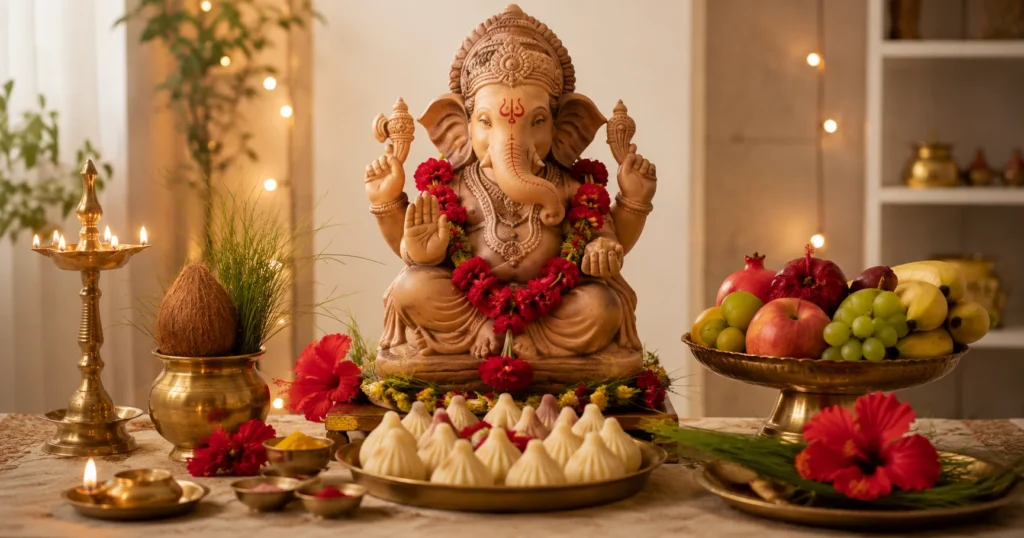
Known by names such as Ganapati, Vinayaka and Vighnaharta, Lord Ganesha is traditionally associated with wisdom, good beginnings and the removal of obstacles.
Ganesh Puja at home does not always need an elaborate setup. With a clean space, a suitable Ganesha idol, a few basic puja items and sincere devotion, families can perform a simple and meaningful puja at home.
Ganesh Chaturthi is one of the most important occasions for worshipping Lord Ganesha. The festival falls on the Chaturthi, or fourth lunar day, of the Shukla Paksha in the Hindu month of Bhadrapada, which generally falls around August or September. The exact date changes every year according to the Hindu calendar.
In this guide, we will look at the Ganesh Puja items, the basic Ganesh Puja rituals at home, the significance of important offerings and some of the cultural beliefs associated with Lord Ganesha.
🪔 Why Do We Worship Lord Ganesha?
Lord Ganesha holds a special place in Hindu traditions. Devotees commonly worship him at the beginning of a puja, ceremony, journey or new undertaking.
People traditionally associate Ganesha with:
- Wisdom and knowledge
- Good beginnings
- Removal of obstacles
- Success in new efforts
- Discernment and good judgement
- Prosperity and well-being
The name Vighnaharta, often used for Lord Ganesha, means the one who removes obstacles. This belief explains why many families begin important occasions by offering prayers to Ganesha.
At the same time, Ganesh Puja is not only about asking for success. For many families, it also creates a moment to pause, pray and seek clarity before moving forward.
🪔 The Cultural Meaning Behind Ganesh Puja
Ganesh Puja has a strong cultural presence across India, and different regions celebrate it in their own ways.
In Maharashtra, Ganesh Chaturthi has become particularly well known for large public celebrations and community pandals. In other parts of India, families may focus more on home worship and smaller gatherings.
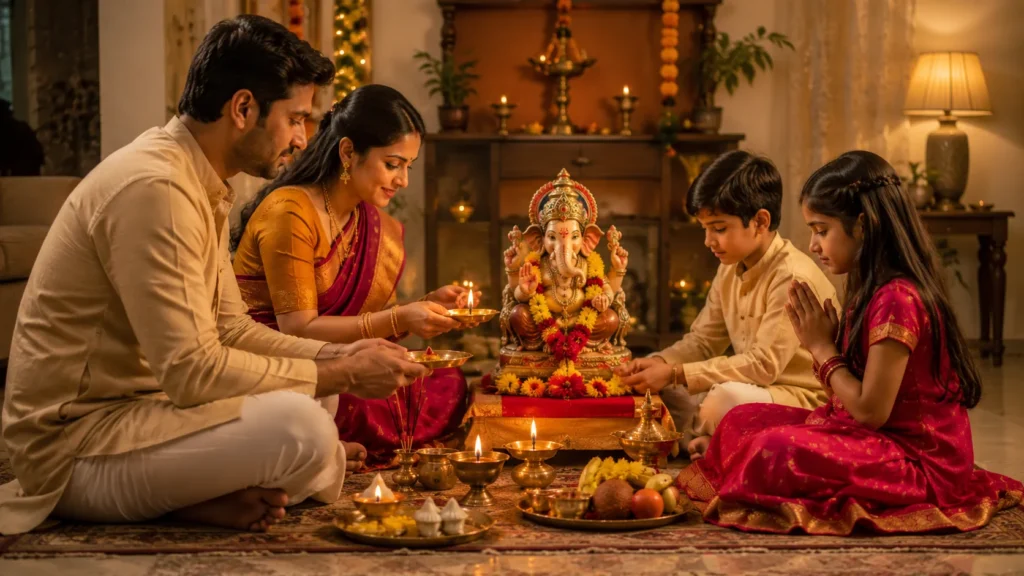
The festival can bring together several generations of a family. Children learn prayers, elders share stories and traditions, and everyone takes part in preparing the home and the offerings.
This makes Ganesh Puja more than a religious ritual for many families. It also becomes a way of preserving family customs and passing them on to the next generation.
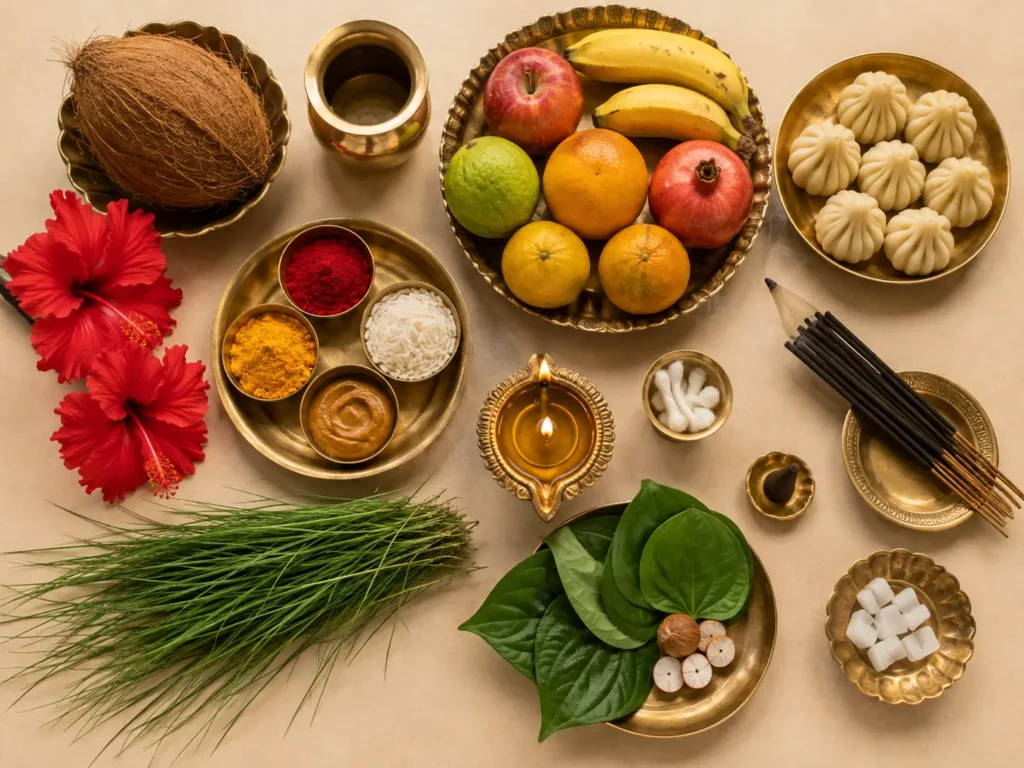
🪔 Ganesh Puja at Home: What Do You Need?
The exact list of Ganesh Puja samagri can differ from one region and family tradition to another. A household puja does not have to include every item used in an elaborate ritual.
Here is a practical list of commonly used Ganesh Puja items.
1. Ganesha Idol
A clean and suitable idol of Lord Ganesha forms the centre of the puja setup.
For Ganesh Chaturthi, many families choose a clay Ganesha idol. Eco-friendly clay idols have also become increasingly popular because they offer a more environmentally conscious way to celebrate the festival.
2. Puja Thali and Basic Utensils
You can keep a clean puja thali along with small bowls and a spoon for arranging and offering the samagri.
A small wooden chowki or raised platform can hold the Ganesha idol.
3. Flowers
Fresh flowers add beauty to the puja space and form an important part of the offering.
Red flowers, especially red hibiscus, are traditionally associated with Lord Ganesha. However, families may use other fresh flowers depending on local customs and availability.
4. Durva Grass
Durva, a type of grass, has a special place in Ganesh Puja. Devotees commonly offer small bunches of durva to Lord Ganesha.
It is one of the most recognisable offerings associated with Ganesha worship.
5. Chandan, Kumkum and Sindoor
Sandalwood paste or chandan, kumkum and sindoor are commonly used during Hindu puja rituals. They can form part of the traditional offerings made to Ganesha.
6. Rice or Akshat
Unbroken rice grains, commonly called akshat, are used in many Hindu puja rituals. Devotees offer them during different stages of the worship.
7. Incense and Dhoop
Agarbatti and dhoop help create a pleasant and traditional puja atmosphere. Use them carefully and keep them away from curtains, paper and other flammable materials.
8. Diya and Ghee or Oil
A diya is an important part of most Hindu pujas. You can use ghee or suitable puja oil along with cotton wicks.
Lighting the diya also marks the beginning of a peaceful and focused worship space.
9. Coconut and Fruits
Coconut and fresh fruits are commonly offered as naivedya during Ganesh Puja. You can choose fruits that are easily available and suitable for your family tradition.
10. Modak
No discussion about Ganesh Puja feels complete without modak.
Modak is one of the most popular offerings associated with Lord Ganesha. Different regions prepare different varieties, including steamed and fried versions. Coconut and jaggery-based fillings are particularly common.
You do not necessarily need to prepare a large quantity. A small homemade or traditionally prepared offering can be enough for a family puja.
11. Betel Leaves and Betel Nut
Betel leaves and supari are commonly included in traditional Hindu puja arrangements, including Ganesh Puja. The quantity and method of offering can vary according to family and regional customs.
12. Camphor
Camphor is commonly used during the aarti. If you use camphor, handle the flame carefully and keep children at a safe distance.
🪔 A Simple Ganesh Puja Samagri Checklist
If you want to keep your home puja simple, you can prepare the following basic set:
- Ganesha idol
- Chowki or clean platform
- Clean cloth
- Puja thali
- Diya
- Cotton wicks
- Ghee or puja oil
- Incense sticks or dhoop
- Camphor
- Flowers
- Durva grass
- Chandan
- Kumkum or sindoor
- Akshat
- Coconut
- Fruits
- Betel leaves
- Betel nut
- Modak or another suitable sweet
- Water
- Aarti lamp
You can add other items according to your family’s traditional Ganesh Puja vidhi.
There is no need to make the puja complicated simply for the sake of following a long checklist. The exact samagri and rituals can vary between regions, communities and families.
🪔 How to Perform Ganesh Puja at Home
A simple home Ganesh Puja can follow a few basic steps. If your family follows a specific puja vidhi or your priest has given you particular instructions, follow those traditions first.
Step 1: Clean the Puja Space
Start by cleaning the area where you plan to perform the puja.
Place a clean cloth on the chowki or platform and arrange the basic puja items nearby. Keeping everything ready beforehand makes the ritual easier and more peaceful.
Step 2: Place the Ganesha Idol
Place the Ganesha idol carefully on the prepared platform.
During Ganesh Chaturthi, families often decorate the area with flowers, rangoli, lights or simple festive decorations.
The decoration does not need to be elaborate. A clean and neat setup can look equally beautiful.
Step 3: Light the Diya and Incense
Light the diya and incense before beginning the main prayers.
This helps create a calm atmosphere and marks the beginning of the puja.
Step 4: Begin with a Prayer
Start the puja by offering your prayers to Lord Ganesha.
You can chant a traditional Ganesha mantra, recite a stotra or simply pray according to your family tradition.
One of the widely known Ganesha mantras is:
“Om Gan Ganapataye Namah.”
You can repeat the mantra with a calm and focused mind.
Step 5: Offer Chandan, Kumkum and Akshat
Offer chandan, kumkum or sindoor and akshat as followed in your family tradition.
You can also offer fresh flowers and durva grass to the deity.
Step 6: Offer Fruits, Coconut and Modak
Place the prepared naivedya before Lord Ganesha.
Modak remains one of the most traditional offerings associated with Ganesh Chaturthi. Fruits, coconut and other sweets can also form part of the offering.
If you prepare food at home for the puja, many families keep the preparation simple and vegetarian.
Step 7: Perform Aarti
After completing the main offerings, perform Ganesha aarti with the diya or aarti lamp.
Family members can join in the aarti and prayers. This often becomes one of the most memorable parts of a home Ganesh Puja, especially when children take part.
Step 8: Offer Prasad
After the puja, distribute the prasad among family members.
Modak, fruits and other offerings can be shared with everyone.
The simple act of sharing prasad also adds a sense of togetherness to the celebration.
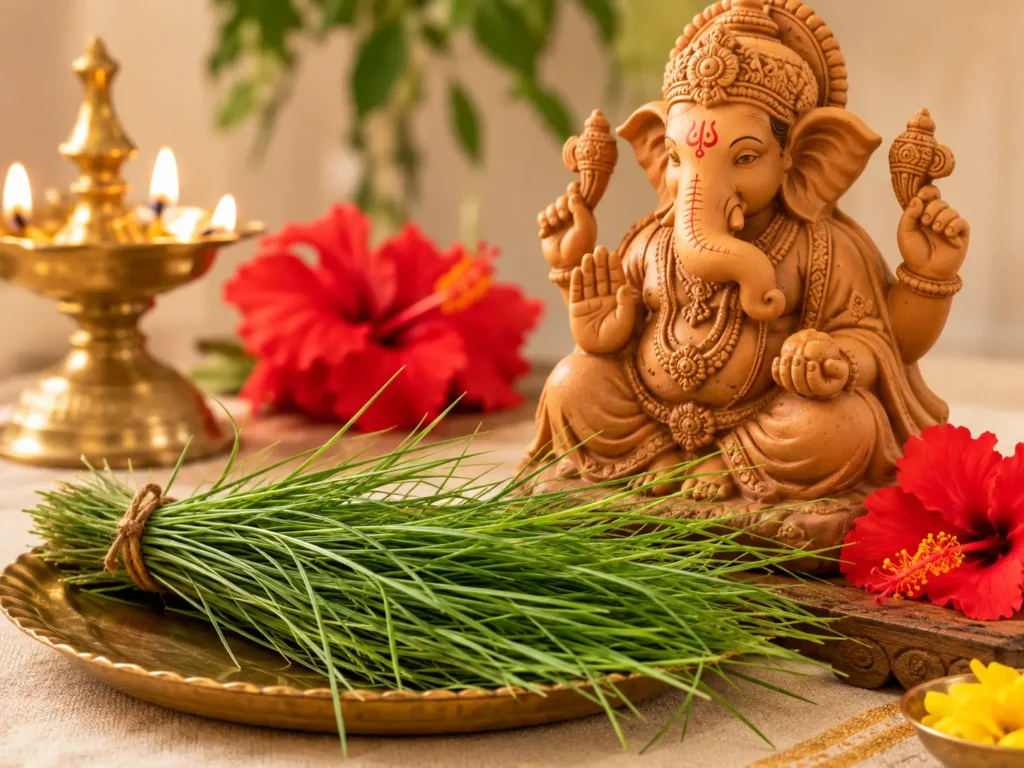
🪔 What Is the Significance of Durva in Ganesh Puja?
Durva grass has a particularly close association with Lord Ganesha.
Devotees traditionally offer durva during Ganesh Puja, and many families consider it one of the essential offerings for the deity. Some traditions offer durva in specific counts or bunches, but the exact practice can vary.
For a home puja, it is useful to keep fresh durva ready rather than treating it as an optional decorative item.
Its importance also shows how Hindu worship often connects everyday natural elements with spiritual traditions.
🪔 Why Is Modak Offered to Lord Ganesha?
Modak is perhaps the most recognisable food associated with Lord Ganesha.
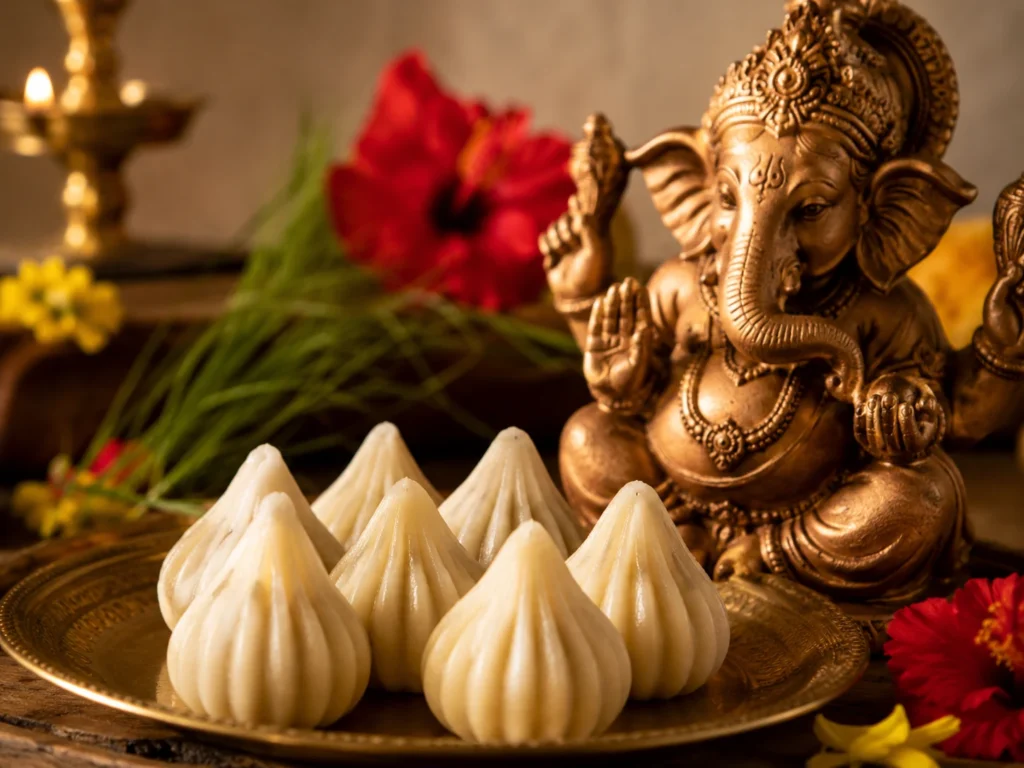
The sweet usually contains ingredients such as coconut and jaggery, although recipes differ across India. Maharashtra is especially well known for ukadiche modak, a steamed variety made with rice flour and a coconut-jaggery filling.
Over time, modak has become closely connected with Ganesh Chaturthi celebrations.
Beyond the food itself, the preparation and sharing of modak brings families together. Parents and grandparents often pass traditional recipes down to younger family members, keeping culinary traditions alive.
🪔 Ganesh Chaturthi and the Tradition of Visarjan
One of the most familiar traditions associated with Ganesh Chaturthi is Ganesh Visarjan, the immersion of the Ganesha idol.
The duration of the festival varies. Some families keep the idol for a day and a half, while others follow traditions of three, five, seven or more days. Some celebrations continue until Anant Chaturdashi.
At the end of the chosen period, devotees take the idol for immersion as part of the visarjan ritual.
For many devotees, visarjan represents the completion of Ganesha’s visit and the cycle of arrival and departure. It also reminds people of the temporary nature of material forms.
Today, many families choose eco-friendly clay idols and responsible immersion methods to reduce the impact on water bodies.
🪔 Why Eco-Friendly Ganesh Puja Matters
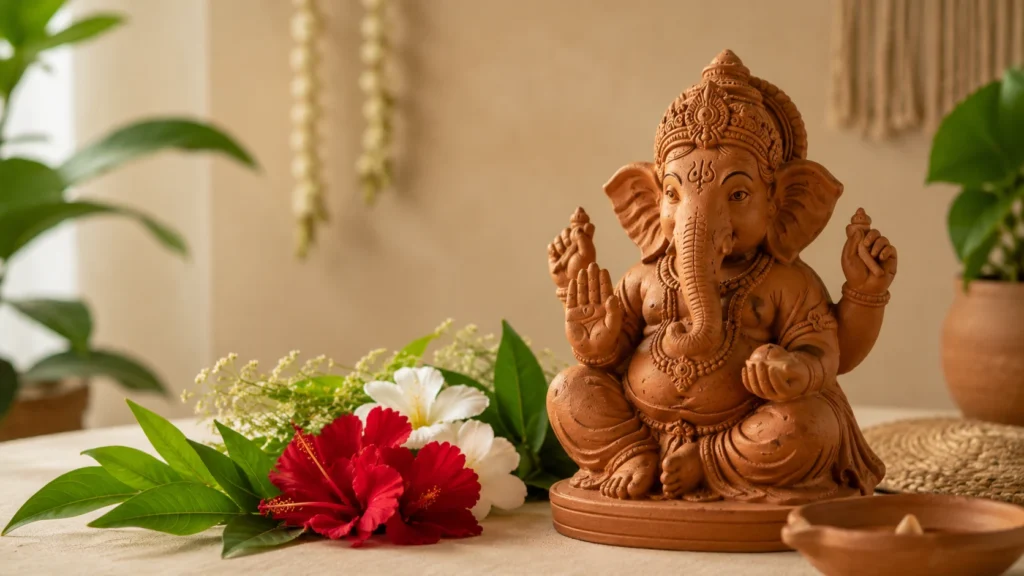
Ganesh Chaturthi brings devotion and celebration together, but it also gives families an opportunity to think about the environment.
Traditional clay idols can dissolve more naturally in water than idols made from materials that do not break down easily. Natural colours and simple decorations can also reduce environmental impact.
If you plan to celebrate Ganesh Chaturthi at home, consider:
- Choosing a natural clay Ganesha idol
- Avoiding plastic decorations where possible
- Using natural or reusable decoration materials
- Keeping the idol size appropriate for your home
- Following local guidelines for visarjan
- Using designated artificial immersion tanks where available
A meaningful celebration does not need excessive decoration or a very large idol. A simple, thoughtful celebration can carry the same sense of devotion.
🪔 Common Questions About Ganesh Puja at Home
Can we perform Ganesh Puja at home without a priest?
Yes. Many families perform simple Ganesh Puja at home themselves. You can follow your family tradition, a trusted puja guide or seek guidance from a priest for more elaborate rituals.
What are the most important Ganesh Puja items?
A Ganesha idol, diya, flowers, durva, chandan, kumkum, akshat, incense, fruits, coconut and a suitable naivedya such as modak form a practical starting point for a simple home puja.
The exact list can vary according to regional and family traditions.
Is modak compulsory for Ganesh Puja?
Modak is a traditional and much-loved offering associated with Lord Ganesha, especially during Ganesh Chaturthi. However, families may offer other sweets or food according to their customs and availability.
Can Ganesh Puja be simple?
Absolutely. A home puja does not have to be elaborate. A clean setup, basic samagri, sincere prayer and aarti can make the occasion meaningful.
How long should we keep the Ganesha idol at home?
There is no single duration followed by every family. Depending on regional and family traditions, households may keep the idol for different periods, from a day and a half to several days or until Anant Chaturdashi.
What type of Ganesha idol is suitable for Ganesh Chaturthi?
Many families prefer natural clay idols, particularly when they plan to perform visarjan. The choice of idol can depend on family tradition, available space and the method of immersion.
🪔 A Simple Way to Prepare for Ganesh Puja
The easiest way to avoid last-minute stress is to prepare your Ganesh Puja samagri a day or two in advance.
Keep the puja items together in one place. Check the flowers and durva closer to the puja time so they remain fresh. Prepare the naivedya beforehand if possible, and keep the diya, incense, camphor and aarti items ready.
You can also make a small personal checklist based on your family’s tradition.
This simple preparation lets you spend less time searching for items and more time taking part in the puja.
🪔 Bring the Tradition Home with Thakurghor
Festivals like Ganesh Puja become special through small details — fresh flowers, carefully arranged puja samagri, traditional offerings and the time spent with family.
At Thakurghor, our aim is to make these traditional preparations easier for Indian households by bringing together everyday puja essentials and festival-specific puja items in one place.
Whether you are preparing for Ganesh Chaturthi or planning a simple Ganesh Puja at home, having the essential samagri ready can make the entire experience more convenient.
After all, the heart of a puja lies not in how elaborate the setup looks, but in the devotion, tradition and togetherness that it brings into the home.
🪔 Final Thoughts
Ganesh Puja at home can be simple, traditional and deeply personal.
From offering durva and flowers to preparing modak and performing aarti with family, every part of the ritual carries its own cultural meaning. At the same time, families across India follow different customs, so there is no need to make every home puja look exactly the same.
The best approach is to understand the meaning behind the rituals, follow your family’s traditions and prepare the essential Ganesh Puja items in advance.
Whether you celebrate Ganesh Chaturthi for one day or several days, the festival offers a beautiful opportunity to bring prayer, family and tradition together under one roof.