Sindoor, Haldi & Chandan — What They Symbolize in Hindu Rituals
Have you ever wondered why almost every Hindu puja includes Sindoor, Haldi, and Chandan?
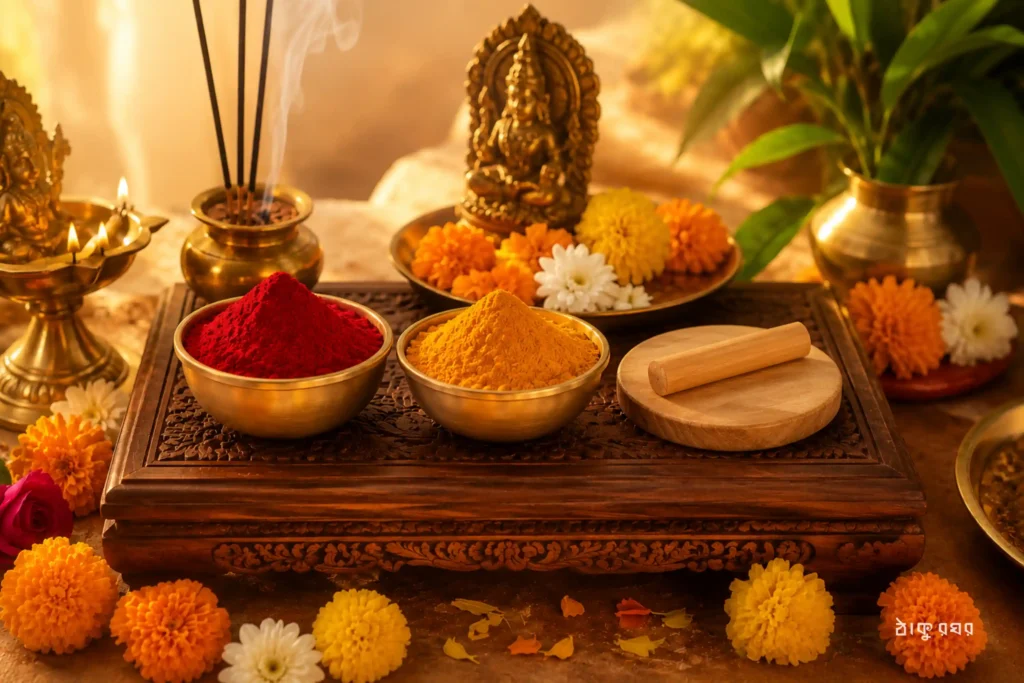
Whether it’s a simple daily prayer at home or a grand festival celebration, these three sacred items are almost always present. They may look like ordinary powders or paste, but each carries deep spiritual meaning that has been passed down through generations.
In Hindu tradition, every offering made during worship has a purpose. Sindoor represents devotion and auspiciousness, Haldi signifies purity and prosperity, while Chandan symbolizes peace and divine consciousness. Together, they help create a sacred atmosphere that encourages focus, gratitude, and spiritual connection.
In this article, we’ll explore the meaning, significance, and traditional uses of Sindoor, Haldi, and Chandan in Hindu rituals. Whether you’re learning about Sanatan Dharma or preparing your own puja, understanding these sacred ingredients will make every prayer more meaningful.
🪔 Why Sacred Ritual Ingredients Matter
Hindu worship is built around symbolism. Every flower, lamp, incense stick, and sacred offering carries a message.
The goal of a puja is not only to perform rituals but also to prepare the mind and heart for devotion. Sacred items remind us of values such as purity, discipline, gratitude, and surrender.
Among these ritual essentials, Sindoor, Haldi, and Chandan hold a special place because they are used in almost every form of worship across India.
If you’re arranging your home temple, keeping these essentials readily available makes daily worship easier. You can also explore Daily Puja Essentials on Thakurghor for commonly used puja items.
🪔 Sindoor – The Symbol of Shakti, Devotion & Auspiciousness
➤ What is Sindoor?
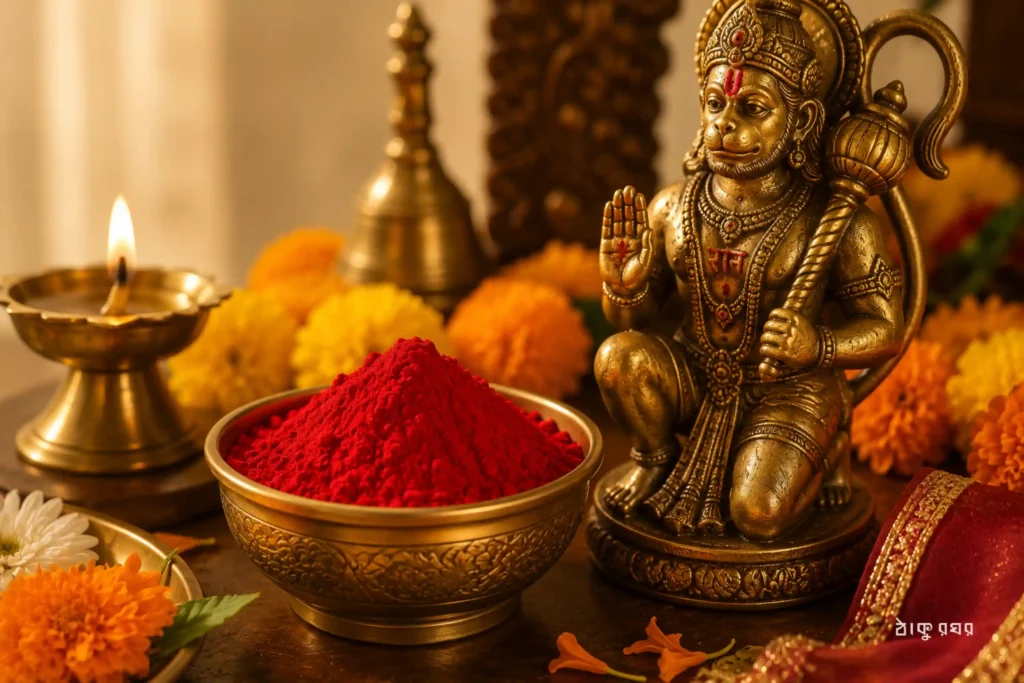
Sindoor is a bright red or vermilion powder traditionally used in Hindu rituals. It has been part of Indian culture for thousands of years and is considered highly auspicious.
Although many people associate Sindoor with married women, its religious importance goes much beyond that.
➤ Spiritual Meaning of Sindoor
The red colour represents:
- Divine feminine energy (Shakti)
- Strength and courage
- Prosperity
- Commitment
- Positive life force
According to Hindu philosophy, the colour red represents action and energy. Offering Sindoor to deities symbolizes offering one’s devotion with sincerity and faith.
➤ Which Deities are Offered Sindoor?
Sindoor is commonly offered to:
- Lord Hanuman
- Goddess Durga
- Goddess Kali
- Goddess Lakshmi (during specific rituals)
- Lord Ganesha in certain traditions
One of the most popular traditions is offering Sindoor to Lord Hanuman, inspired by the well-known story where Hanuman covered himself with Sindoor out of devotion to Lord Rama and Mata Sita.
➤ Sindoor in Married Women’s Tradition
Applying Sindoor in the hair parting (maang) is one of the most recognized Hindu customs for married women.
It symbolizes:
- Marital commitment
- Blessings for the husband’s long life
- Prosperity of the family
- Sacred bond of marriage
While this custom varies across regions and communities, its spiritual significance remains deeply respected.
➤ How Sindoor is Used During Puja
Devotees commonly use Sindoor for:
- Tilak on deities
- Offering to Goddess Durga
- Hanuman Puja
- Navratri rituals
- Kali Puja
- Temple worship
- Home altar decoration
🪔 Haldi – The Sacred Symbol of Purity & Prosperity
➤ What is Haldi?
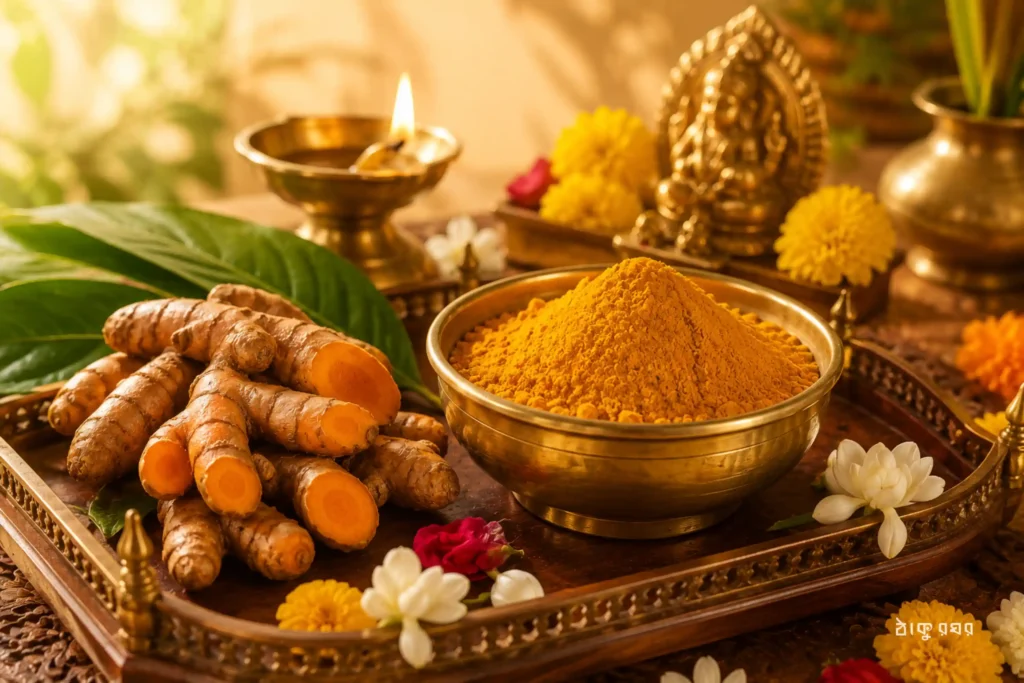
Haldi (turmeric) is one of India’s oldest sacred and medicinal plants.
Besides its use in cooking and Ayurveda, Haldi occupies an important place in Hindu rituals because it represents purity, good fortune, and abundance.
➤ Spiritual Meaning of Haldi
The yellow colour represents:
- Knowledge
- Prosperity
- Positive energy
- Fertility
- Auspicious beginnings
Because of these qualities, Haldi is used before starting new journeys, marriages, housewarming ceremonies, and many religious festivals.
➤ Haldi in Hindu Ceremonies
Haldi is widely used in:
Marriage Rituals – According to Hindu tradition, the Haldi ceremony symbolizes blessings of happiness, good health, and prosperity for the bride and groom.
Griha Pravesh – According to Hindu tradition, families often mix turmeric with water and use it for purification before entering a new home.
Daily Worship – During many pujas, devotees offer Haldi to Lord Vishnu, Lord Ganesha, and Goddess Lakshmi.
Festival Worship:
Haldi is commonly used during:
- Ganesh Chaturthi
- Lakshmi Puja
- Satyanarayan Puja
- Saraswati Puja
- Varalakshmi Vratam
- Annapurna Puja
➤ Traditional Uses of Haldi in Puja
Haldi is used for:
- Tilak
- Swastika symbols
- Kalash decoration
- Sacred thread rituals
- Preparing turmeric paste
- Offering to deities
Its natural fragrance and bright colour make it one of the most essential ingredients in Hindu worship.
🪔 Chandan – The Symbol of Peace, Wisdom & Divine Consciousness
➤ What is Chandan?
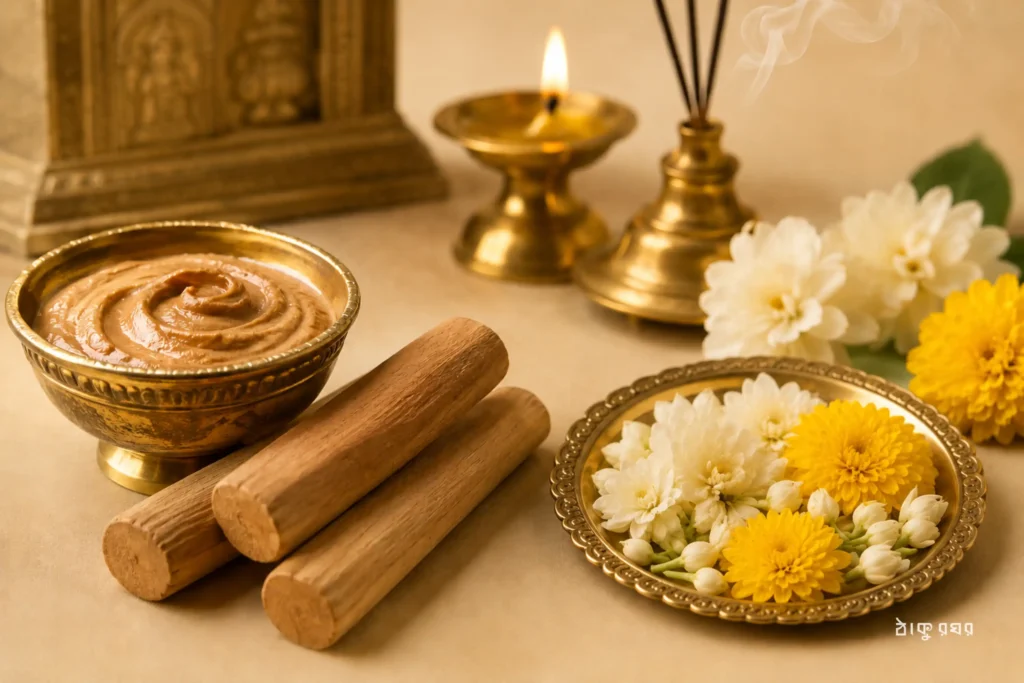
For centuries, Hindu tradition has regarded Chandan (Sandalwood) as one of the purest offerings in worship. Its naturally cooling fragrance represents calmness, wisdom, and spiritual awareness.
➤ Spiritual Meaning of Chandan
Chandan symbolizes:
- Inner peace
- Mental clarity
- Purity of thoughts
- Devotion
- Divine grace
Unlike many ritual ingredients, Hindu tradition associates Chandan with a calm mind and emotional balance during worship.
➤ Why Devotees Apply Chandan to Deities
Devotees decorate many Hindu idols with Chandan paste as a mark of respect and purity.
It is commonly offered to:
- Lord Krishna
- Lord Vishnu
- Lord Shiva
- Lord Rama
- Lord Jagannath
- Lord Ganesha
Applying Chandan during worship also reminds devotees to remain calm and humble.
➤ Chandan Tilak
Devotees also apply Chandan to the forehead during prayer. Hindu tradition regards the forehead, particularly the space between the eyebrows, as the location of the Ajna Chakra (third eye), which symbolizes awareness and concentration. By applying Chandan, devotees remind themselves to cultivate focus, wisdom, and inner peace during worship.
🪔 Why These Three Are Used Together
Although each has its own significance, Sindoor, Haldi, and Chandan beautifully complement one another.
| Sacred Item | Represents |
| Sindoor | Divine Energy & Devotion |
| Haldi | Purity, Prosperity & Auspiciousness |
| Chandan | Peace, Wisdom & Spiritual Awareness |
Together they symbolize a complete spiritual offering:
- Devotion
- Purity
- Prosperity
- Peace
- Divine blessings
This is why they appear together in many puja thalis across India.
🪔 Choosing Pure Puja Ingredients
When purchasing puja items, it is always advisable to choose products meant specifically for religious use.
Pure and good-quality ritual ingredients help preserve traditional practices and provide a more authentic worship experience.
Along with Sindoor, Haldi, and Chandan, a complete puja setup may also include:
- Kumkum
- Akshata (rice)
- Incense sticks
- Camphor
- Cotton wicks
- Ghee
- Diyas
- Conch (Shankha)
- Puja flowers
If you’re looking to organize your home temple, you can also explore Ready-Made Puja Kits, Daily Puja Essentials, and other Puja Samagri available at Thakurghor to find commonly used worship items in one place.
🪔 Frequently Asked Questions (FAQs)
➤ Is Sindoor and Kumkum the same?
No. While both are red in colour and used in Hindu rituals, they are traditionally prepared differently and may have different ceremonial uses depending on regional customs.
➤ Can you offer Haldi to every deity?
Haldi is offered to many Hindu deities, especially Lord Ganesha, Lord Vishnu, and Goddess Lakshmi. However, ritual practices can vary across temples, traditions, and regions. It is always best to follow the customs observed in your family or local temple.
➤ Why is Chandan considered sacred?
Its pleasant fragrance, cooling nature, and long-standing use in temples have made Chandan a symbol of purity, peace, and devotion in Hindu worship.
➤ Can you use these items in your daily home puja?
Yes. Devotees commonly use Sindoor, Haldi, and Chandan during their daily home puja.
🪔 Final Thoughts
Hindu rituals are rich in symbolism, and even the smallest offerings carry deep meaning. Sindoor reminds us of devotion and divine energy. Haldi represents purity, prosperity, and auspicious beginnings. Chandan teaches peace, humility, and spiritual awareness.
Understanding the significance of these sacred ingredients helps transform rituals from routine practices into mindful acts of devotion.
Whether you perform a simple morning prayer or celebrate festivals with family, keeping these traditional puja essentials close at hand allows you to continue timeless customs with faith and reverence.
At Thakurghor, we believe that every home deserves access to authentic puja essentials that help preserve our traditions for generations to come.