Why Do We Use Shankha (Conch Shell) in Puja — Spiritual & Cultural Meaning
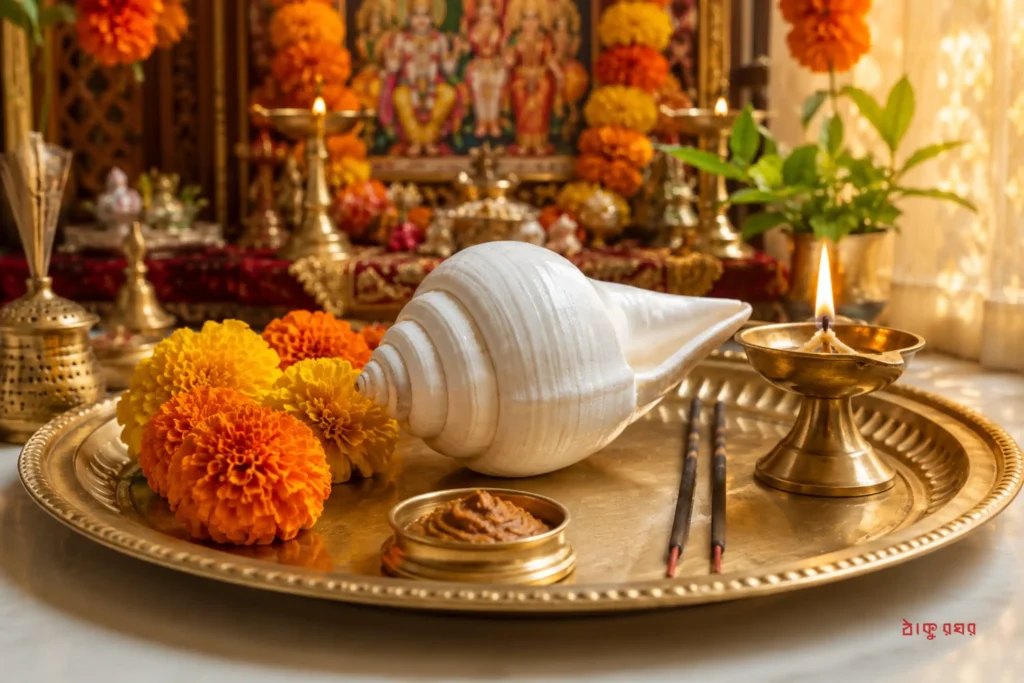
Walk into any traditional Hindu home during puja, and you will often hear the powerful sound of a Shankha (conch shell). Whether it is during daily worship, Durga Puja, Lakshmi Puja, or temple rituals, the blowing of the Shankha has been an important part of Hindu traditions for thousands of years.
But have you ever wondered why the Shankha is considered so sacred? Is it simply a ritual passed down through generations, or is there a deeper spiritual meaning behind it?
In this article, we will explore the religious significance, historical importance, scientific perspective, and cultural beliefs associated with the Shankha. Whether you are new to Hindu rituals or simply curious to learn more, this guide will help you understand why the conch shell continues to hold such an important place in Hindu worship.
🪔 What is a Shankha?
A Shankha is a naturally formed conch shell that comes from large marine snails found in the ocean. In Hinduism, it holds a sacred place among ritual objects, and people use it in temples as well as during home worship.
Traditionally, a Shankha is used for:
- Blowing before and after puja
- Offering holy water (Shankha Jal)
- Abhishek (ritual bathing of deities)
- Temple ceremonies
- Festivals and religious processions
Its beautiful spiral shape and powerful sound have made it a symbol of purity, auspiciousness, and divine energy.
🪔 Why is the Shankha Considered Sacred?
The importance of the Shankha comes from Hindu scriptures, mythology, and centuries of spiritual traditions.
Many ancient texts describe the conch shell as a symbol of:
- Purity
- Prosperity
- Positive energy
- Divine protection
- Victory of good over evil
According to Hindu tradition, the sound of the Shankha helps purify the surroundings and prepares the mind for worship. Rather than serving as just a musical instrument, the Shankha symbolizes the beginning of a sacred ritual.
🪔 Connection Between Lord Vishnu and the Shankha
One of the strongest reasons behind the importance of the Shankha is its association with Lord Vishnu.
In almost every traditional image of Lord Vishnu, He is shown holding four sacred objects:
- Shankha (Conch)
- Chakra (Discus)
- Gada (Mace)
- Padma (Lotus)
The divine conch carried by Lord Vishnu is known as Panchajanya.
According to Hindu beliefs, the sound of Panchajanya symbolizes:
- The victory of righteousness
- Protection from negativity
- The beginning of divine action
- Cosmic creation through sacred sound
Because of this connection, devotees consider the Shankha a symbol of Lord Vishnu’s blessings.
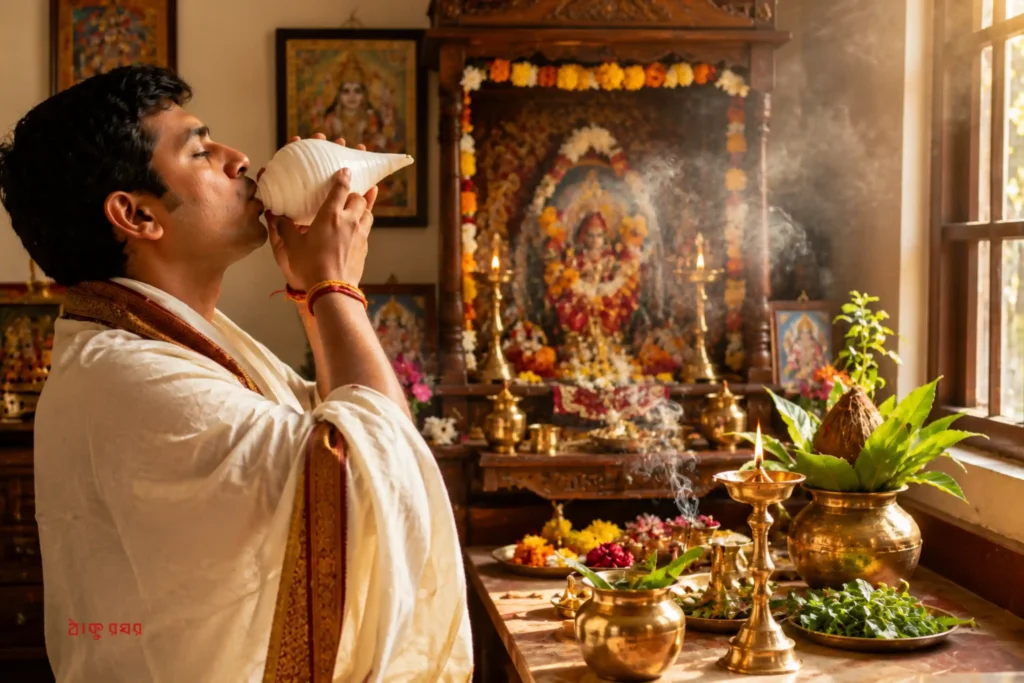
🪔 Why is the Shankha Blown Before Puja?
Blowing the Shankha before worship serves several symbolic purposes.
➤ It announces the beginning of worship
Just as temple bells invite devotees to focus on prayer, the Shankha signals that the time for worship has begun.
➤ It creates a spiritual atmosphere
Its deep, resonating sound helps devotees leave behind daily distractions and focus their minds on prayer.
➤ It symbolizes positivity
Traditional beliefs say that the sound of the Shankha drives away negative vibrations and welcomes positive energy into the home. Although these beliefs are spiritual in nature, many Hindu families have practiced these traditions with faith and devotion for generations.
🪔 Scientific Perspective Behind Blowing the Shankha
Apart from its religious significance, many people also discuss possible health-related benefits of blowing a conch shell.
These are traditional observations, not medical advice. However, regular practice may help:
- Improve breathing control
- Strengthen lung muscles
- Exercise facial muscles
- Improve breath capacity
- Encourage deep breathing
The act of blowing the Shankha requires controlled breathing, which naturally engages the lungs and diaphragm. Although scientific research in this area remains limited, many yoga practitioners consider blowing the Shankha a simple breathing exercise.
🪔 The Symbolism of the Spiral Shape
The unique spiral design of the Shankha has fascinated people for centuries.
Many spiritual traditions associate the spiral with:
- The cycle of creation
- Continuous growth
- Infinity
- The flow of cosmic energy
Its natural shape is often viewed as a reminder that life is constantly moving and evolving.
🪔 Types of Shankha Used in Hindu Worship
Not every Shankha is used in the same way. Some commonly known varieties include:
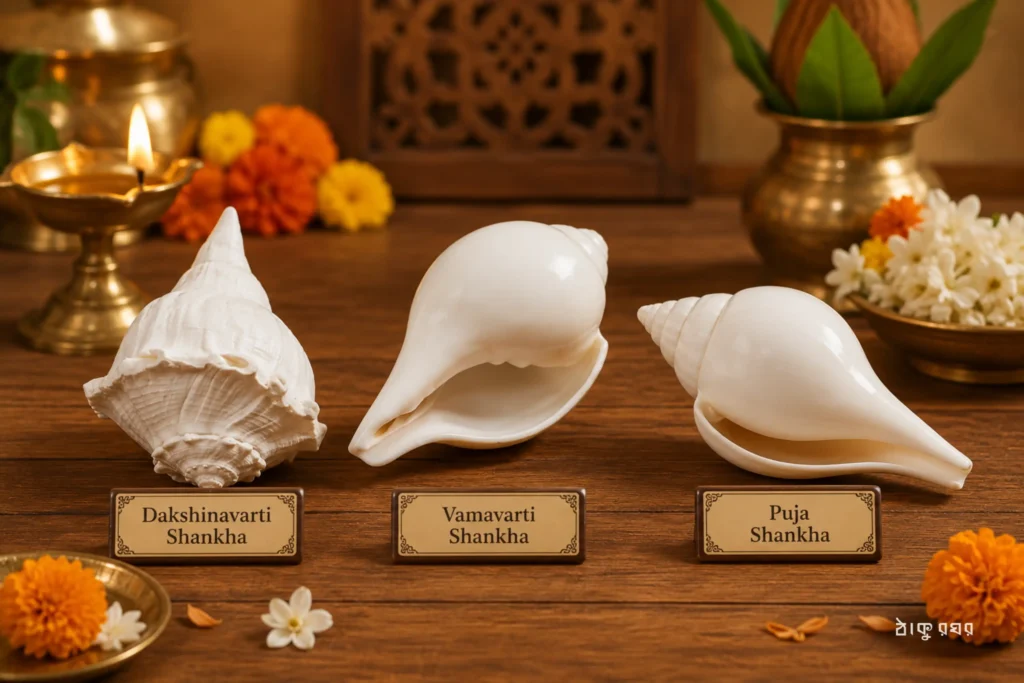
➤ Dakshinavarti Shankha
This rare conch opens towards the right side, and Hindu tradition associates it with wealth and prosperity. Many families keep it in their home temples without blowing it.
➤ Vamavarti Shankha
Devotees commonly use this type of Shankha for daily worship and blow it during pujas and festivals.
➤ Puja Shankha
Devotees commonly use these Shankhas for temple rituals, offering holy water, and performing Abhishek.
🪔 Festivals Where the Shankha Plays an Important Role
The Shankha is heard during many Hindu festivals, including:
- Durga Puja
- Lakshmi Puja
- Kali Puja
- Janmashtami
- Satyanarayan Puja
- Saraswati Puja
- Jagannath Rath Yatra
- Daily morning and evening puja
In Bengal, people closely associate the sound of the Shankha during many Hindu rituals with tradition and devotion. It is often accompanied by the rhythmic sound of Uludhwani, creating a spiritually uplifting atmosphere.
🪔 How to Use a Shankha During Daily Puja
If you are using a Shankha at home, here are a few simple practices:
- Clean it regularly with clean water.
- Keep it in your puja room.
- Blow it before beginning the puja.
- Use a separate Shankha if you offer holy water.
- Always handle the Shankha with respect, as Hindu tradition regards it as sacred.
Many devotees also avoid placing the Shankha directly on the floor. These simple practices can help you use and maintain your Shankha with care during daily worship. If you’re building a complete home temple or wondering which other items are essential for daily worship, read our guide Daily Puja Checklist: Essential Items Every Home Should Have.
🪔 How to Choose the Right Shankha for Your Home
When selecting a Shankha, consider:
- Natural white colour
- Smooth finish without cracks
- Comfortable size for blowing
- Clear and resonant sound
- Authentic sourcing
A well-selected Shankha can become a meaningful part of your family’s daily worship for many years.
🪔 Frequently Asked Questions (FAQs)
➤ Can everyone blow a Shankha?
Yes. There is no universal religious rule preventing devotees from blowing a Shankha during worship. However, some families follow traditions that are specific to their community or lineage. It is perfectly acceptable to respect your family’s customs while understanding that practices can vary across regions.
➤ Can a Shankha be kept in every home?
Yes. Many Hindu families keep a Shankha in their home temple as a sacred symbol and use it during daily prayers or special occasions.
➤ Why are two different Shankhas sometimes used?
Many families use one Shankha specifically for blowing and another exclusively for offering holy water during rituals.
➤ Is a cracked Shankha suitable for worship?
Generally, devotees avoid using a damaged or cracked Shankha during puja and prefer one that is complete and in good condition.
🪔 Conclusion
The Shankha is much more than a beautiful conch shell. It represents centuries of faith, devotion, culture, and spiritual symbolism. From its close connection with Lord Vishnu to its role in daily worship and major festivals, the Shankha continues to remind devotees of purity, positivity, and the beginning of sacred rituals.
Whether you use it every day or only during special occasions, understanding its significance can make your worship more meaningful and help preserve an important part of India’s rich spiritual heritage.
If you are looking for an authentic Shankha for your home temple, choosing one with care and reverence can become a lasting addition to your family’s devotional traditions. At Thakurghor, you can also find a wide range of puja essentials, including diyas, incense, puja thalis, Ganga Jal, and other traditional items to complete your home temple.