Daily Puja Checklist: Essential Items Every Home Should Have
A daily puja does not need to be elaborate. It is a simple, peaceful ritual — a few minutes of connection, gratitude, and calm.
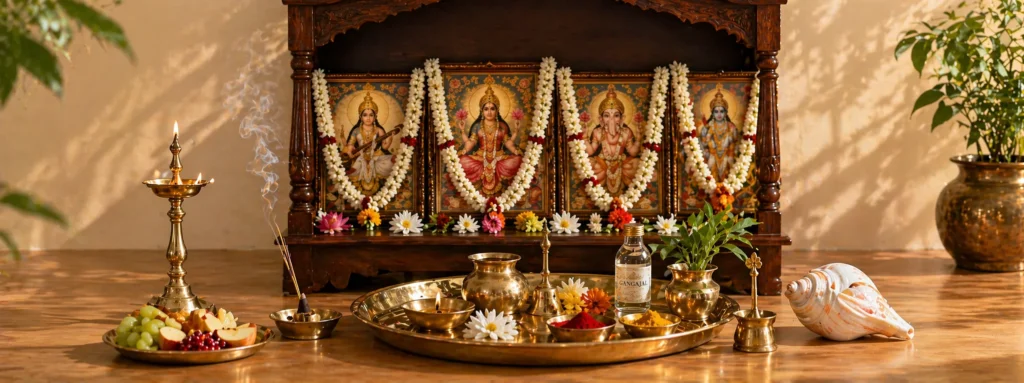
In many Bengali and Indian homes, this quiet practice is part of everyday life. Whether it is lighting a diya in the morning, offering flowers, or just sitting in silence — these small rituals bring a sense of balance to our day.
If you are setting up your daily puja routine or simply want to ensure you have everything you need, here is a simple and practical checklist of essential puja items.
🌼 Why Daily Puja Matters:
Daily puja is not about strict rules or long rituals. It is about:
- Creating a peaceful start to your day
- Staying connected to your traditions
- Bringing positivity into your home
- Taking a few mindful moments for yourself
Even a 5-minute puja can make a difference.
🌼 Essential Items for Daily Puja
Here is a basic checklist of items that are commonly used in everyday puja at home.
1. Diya (Lamp)
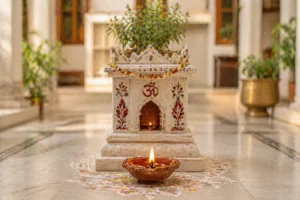
A diya is one of the most important parts of any puja. Lighting a diya symbolizes:
- Removal of darkness
- Presence of positive energy
- Beginning of the ritual
You can use Brass or clay diya and use mustard oil / ghee to lit it. Even lighting a single diya daily is enough.
2. Fresh Flowers
Flowers are offered as a mark of devotion and purity.
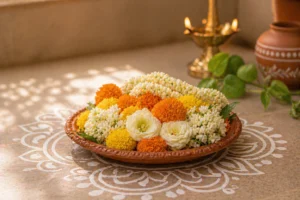
Common choices:
- Marigold
- Lotus
- Jasmine
- Any clean, fresh flower available at home
It’s not about specific flowers — sincerity matters more.
3. Incense / Dhoop / Agarbatti
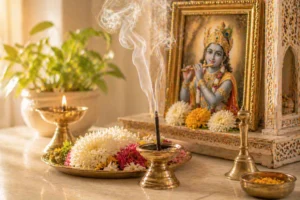
Fragrance plays an important role in puja.
- Creates a calming atmosphere
- Helps focus the mind
- Symbolizes offering to the divine
You can choose:
- Agarbatti (incense sticks)
- Dhoop cones
- Traditional dhoop
4. Puja Thali (Plate)
A small thali helps keep everything organized. It usually contains:
- Diya
- Incense
- Kumkum / Haldi
- Flowers
It keeps your daily puja simple and organized.
5. Water (Preferably in a Small Kalash)
Water is considered pure and essential in rituals. Used for offering. Symbolizes life and cleanliness, If available, you can use:
- Regular clean water
- Ganga jal (optional)
6. Bell (Ghanti)
Ringing a bell marks the beginning of puja. It is believed to:
- Remove negative vibrations
- Create a sacred atmosphere
7. Idols or Photos of Deities
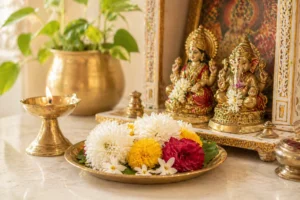
Your puja space should have: Idols or framed images of your chosen deity It can be:
- Krishna
- Durga
- Lakshmi
- Shiva
- Or any form you worship
Keep it simple and clean — no need for too many items.
8. Kumkum, Haldi, Chandan
These are used for:
- Tilak
- Offering
- Marking sacredness
Keep small quantities — only what you need daily.
9. Fruits or Simple Bhog (Optional)
Offering food is a gesture of gratitude. You can offer:
- Fruits
- Mishti (sweets)
- Or even a small portion of your daily meal
Keep it simple — intention matters more than quantity.
10. Shankha (Conch Shell)
A Shankha (conch shell) holds a special place in Hindu worship and is commonly used during daily puja as well as major festivals. Many devotees blow the
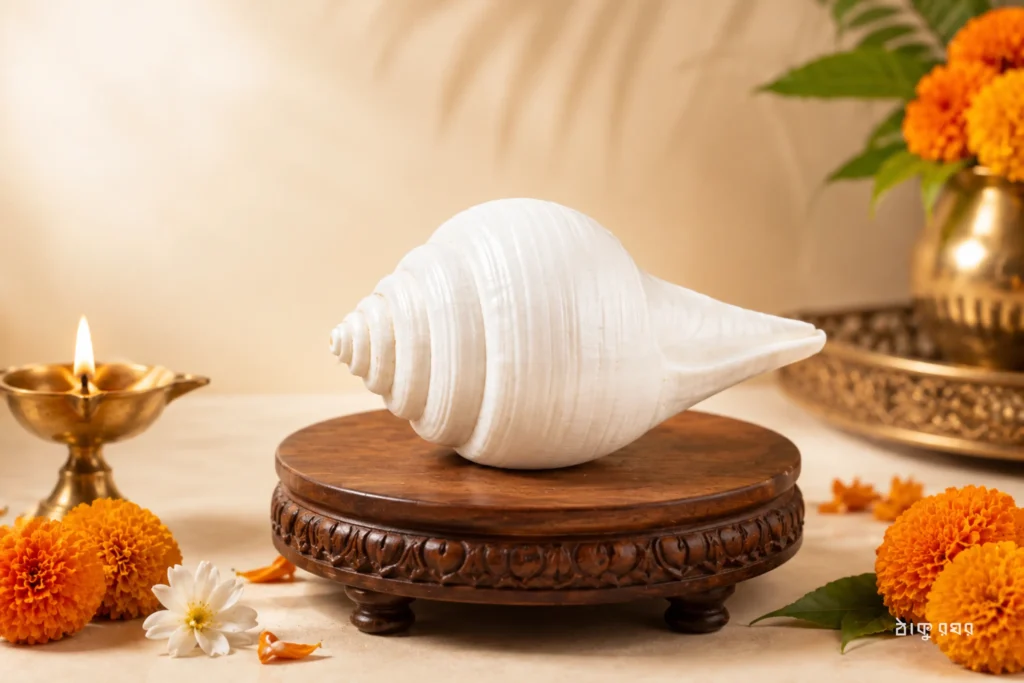
Shankha before or after offering prayers, as it marks the beginning of worship and creates a peaceful devotional atmosphere. Some families also use a separate Shankha for offering holy water during rituals and Abhishek.
While not every household follows the same traditions, many Hindu homes consider the Shankha an important part of their puja room. If you’re planning to build a complete collection of daily puja essentials, keeping a Shankha in your home temple can be a meaningful addition.
Want to learn more? Read our detailed guide on Why Do We Use Shankha (Conch Shell) in Puja? – Spiritual & Cultural Meaning to explore its religious significance, cultural importance, different types, and role in Hindu rituals.
🌼 Simple Daily Puja Routine (Optional Guide)
If you’re unsure how to begin, here’s a basic flow:
- Clean the puja area
- Light the diya
- Light incense
- Offer flowers
- Sit quietly or say a short prayer
- Ring the bell (optional)
- Close with gratitude
This can be done in just a few minutes.
🌼 Common Mistakes to Avoid
Keeping too many unnecessary items, skipping cleanliness of the puja space, treating puja as a task instead of a moment, overcomplicating rituals.
Keep it simple, consistent, and peaceful.
🌼 Creating Your Own Thakurghor at Home
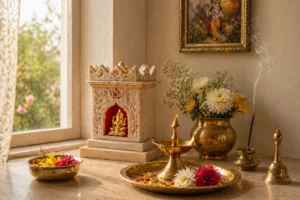
Your puja space does not need to be large or decorative. A small corner with a clean surface, a diya, a few essentials… is enough to begin.
That is the true idea of a thakurghor — your personal sacred space at home.
A Small Thought..
Daily puja is not about perfection. It is about presence. Even on busy days, lighting a diya for a few seconds is enough to stay connected.
🌼 Everything You Need, In One Place
At Thakurghor, we try to make this simple for you.
From diyas and incense to complete puja essentials — everything is carefully selected so that you can focus on your rituals, not the hassle of arranging items.
Explore our puja essentials collection and build your own thakurghor at home.
Final Words. Start small. Stay consistent. Your daily puja does not have to be elaborate — it just has to be meaningful.